I’ve been looking for trouble for as long as I can remember. WSET 3 became yet another outlet of this personal tendency, though one I wish I had assessed bit more diligently.
Several years back, I have started attending Lithuanian Sommelier School. I have happily completed two semesters out of three, yet at some point I felt like a change of format was needed. Luckily, several of my friends and colleagues from the school shared the feeling – that’s how Vyno Klubelis, our informal blind tasting group, was born. It’s currently wrapping up its second season of existence, and I couldn’t be happier with how it turned out.
As fun as it is to explore wines with good company, I felt like I needed a bigger challenge and more structure to fuel my growth in the wine world. Life then generously handed me half a year in Italy, and I made a pact with myself to use that time for some accelerated wine learning. WSET 3 seemed like the natural next step.
Ignorance is bliss
After choosing and registering to the course while still being in Lithuania, I received the course material book almost right after moving to Italy, with 1.5 months left before the course. A thin 200-page book, easy-breezy-beautiful, I thought. Soon, but not soon enough, I realised it reads more like a 200-page summary.
A coworker seemed politely confused when during the work trip I told her that last night, I had spent three hours reading eight pages. While to me, that was a productive evening. With all the pleasures of Italy at hand and intense timing at work, I barely finished my diligent-ass reading before the first in-class session.
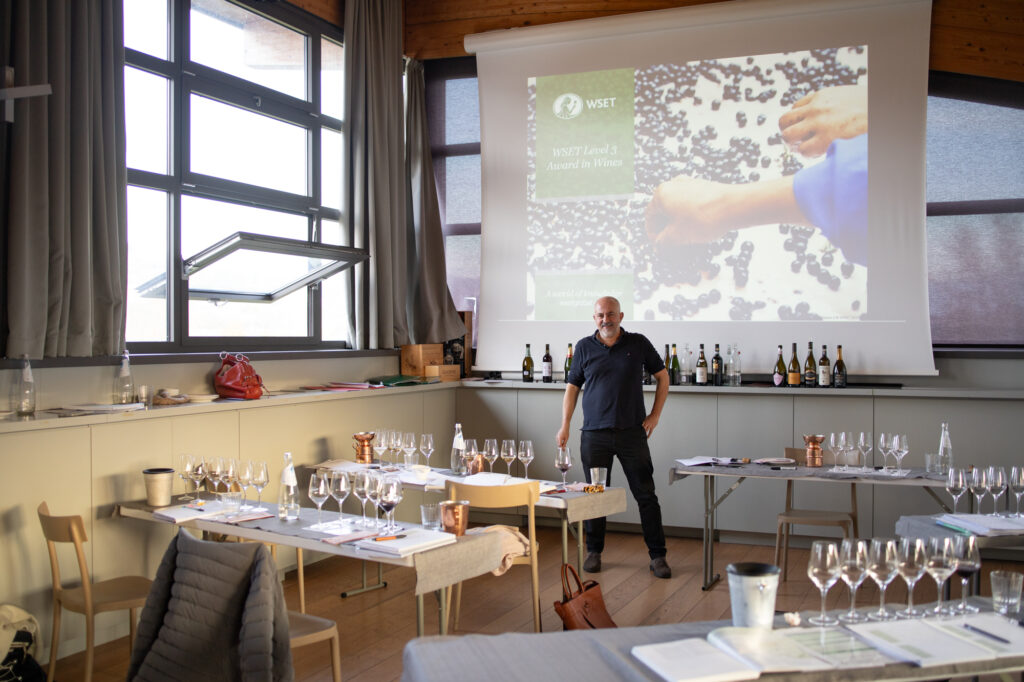
My instructor, Matteo, confirmed I wasn’t crazy – getting through the book surely takes time. He also insisted that WSET 3 is not an exam you can “just try” to pass. A wise and realistic man indeed.
Piacere, sono Silvia
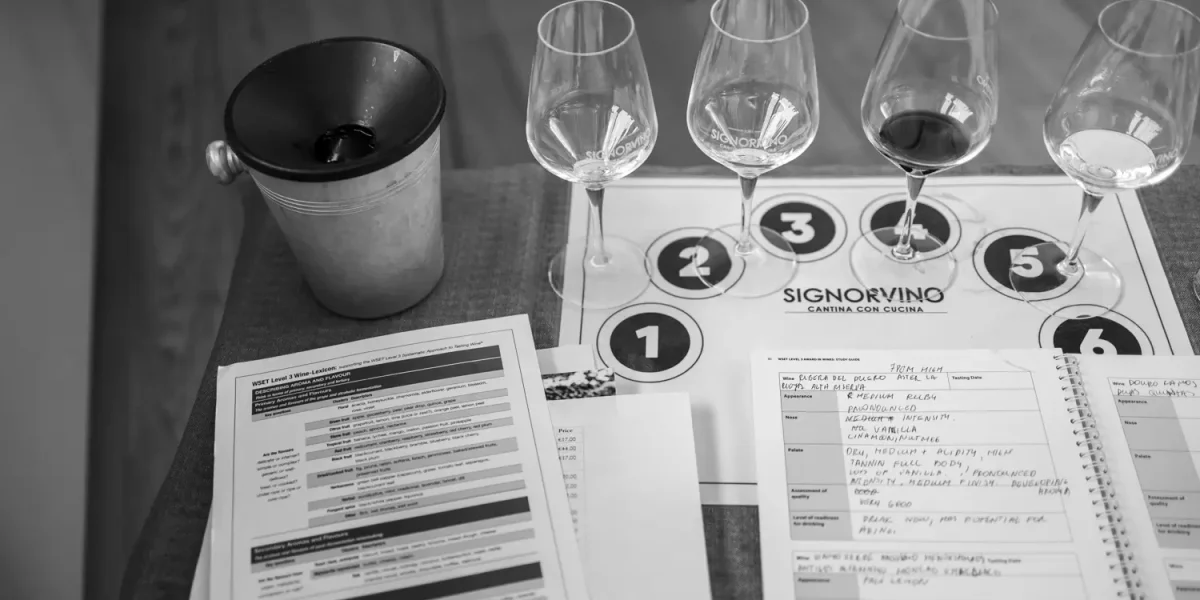
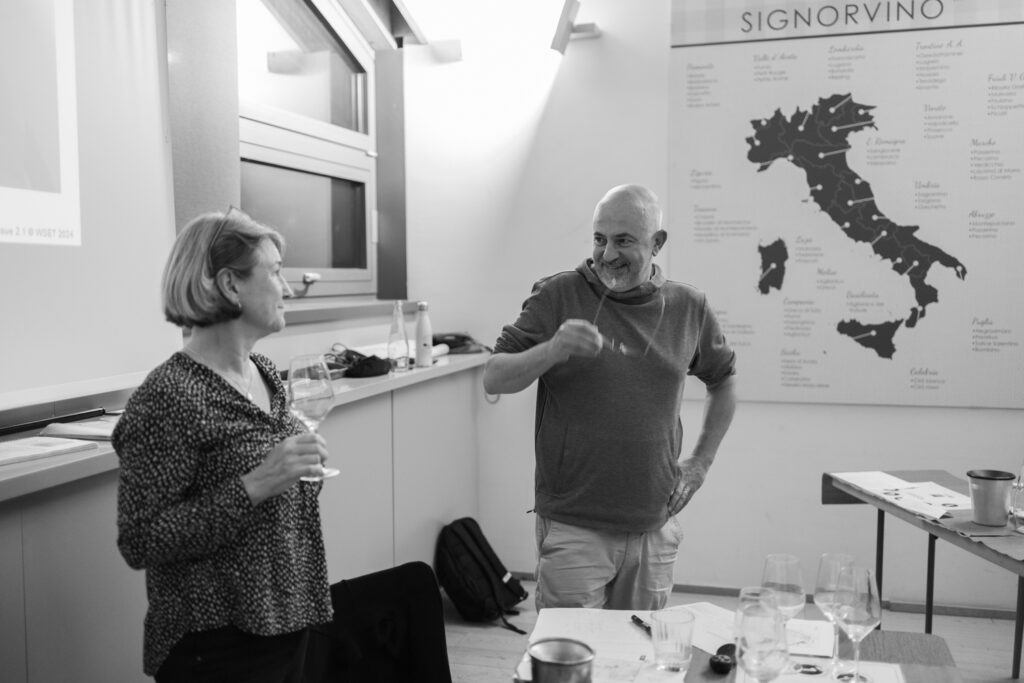
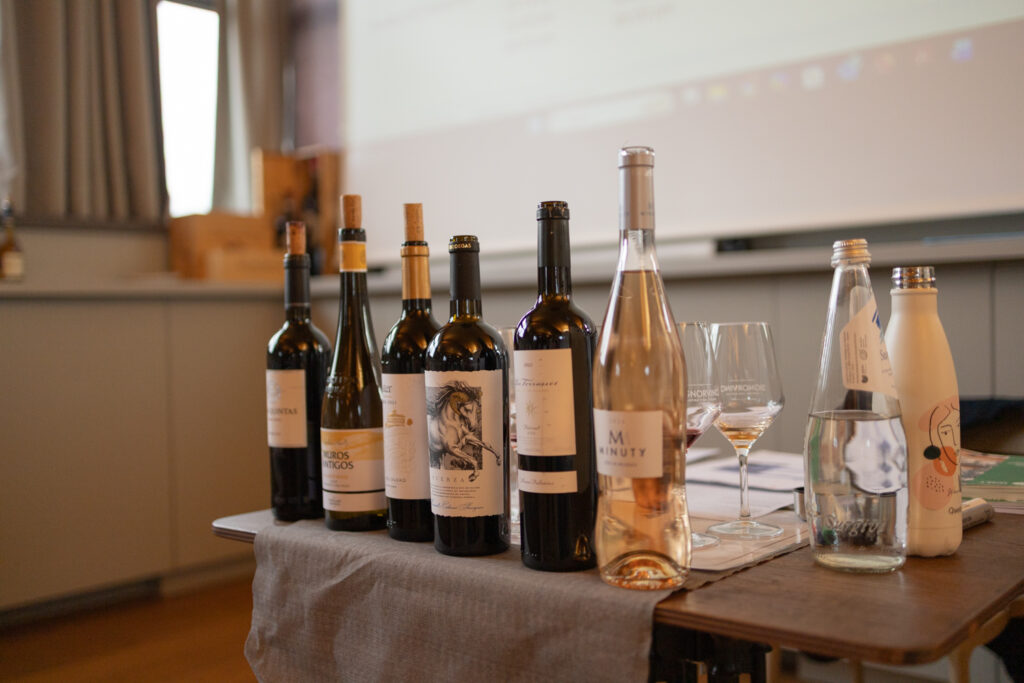
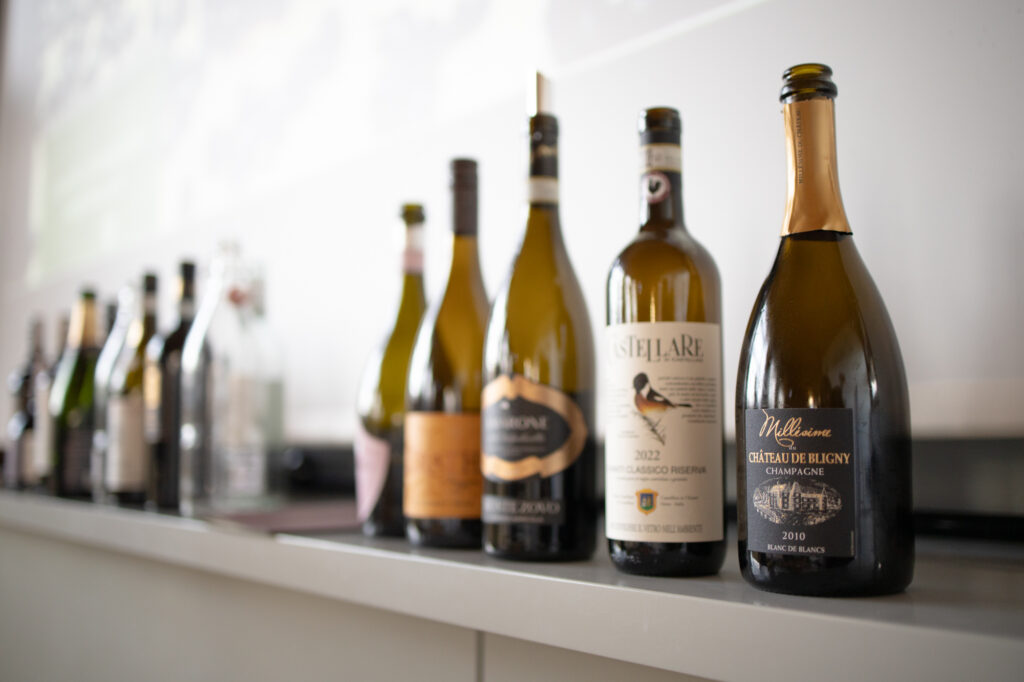
My chosen school held its WSET Level 3 courses in Verona, and the best part was their schedule. Instead of a five-day intensive madness, they offered three study weekends with the exam on the following Monday. Honestly, if you’re considering WSET 3, I suggest you choose a format like this. Each day is intense enough on its own: tasting and assessing 14–17 wines per day, backgrounded by theory.

What surprised me (again, why was I surprised?) was that I was the only foreigner. No other lost international souls searching for purpose through wine. My coursemates were extremely knowledgeable about wines and producers, exactly the area I struggle with most. That’s the drawback of learning about wine while not working in the industry – you’re too overwhelmed and often too broke to get familiar with the genre-defining bottles. Anyway, was really nice to learn a thing or two from them.

No poetry, just business
I really, really liked the course material itself. For my very personal taste and at this stage of my wine journey, most of the wine tastings are tad too vague in terms of the theory, while WSET was all about is all about essential facts, asking why and explaining what makes the wine in the glass the way it is.
It’s one big puzzle, a never ending one actually. But the way material is organised and presented, just hits the spot. I feel that in these two months I spent studying I have improved so so much, I have rediscovered the joy of the struggle (oh the irony) of learning something by heart till it finds it’s permanent place in the system of your head. What a sweet feeling. I’m really looking forward to doing a wine tasting for a larger crowd than my husband, who also got a fair amount of second hand knowledge in this period.
Exam time!
Finally, I have also quite enjoyed writing the exam (wow, geeky). It helped pinpoint the parts of the wine map in my head that are still missing. The exam consists of two parts: blind tasting and theory (test + open questions). Out of 50 test questions, I felt like five-ish were taken from another book, or at least from those eight pages I skimmed. The open questions (worth 100 marks total, meaning you have to mention 100 relevant things) were luckily not about Australia. There’s intense time pressure during the exam and for the first time in my life, I felt like I ran out of time.
Fun fact, it will only take 10–12 weeks for the examiners in the UK to assess our tests and send us the congratulations. Or the ticket to the grand retake, which I actually wouldn’t mind going to.
All in all
During the last two months I just couldn’t stop thinking about what a great feeling is to do things that you want. No clear agenda needed.
_________
P.S. Editing this post a while after recieving the exam results. Pass with merit, and thankfully, everything seems bit less dramatic now! 🙂